Monday, July 4, 2011


Happy Fourth of July!!!
Special Olympics, one reason to celebrate America's Birthday. We are all special.
Sunday, July 3, 2011
For your viewing pleasure
We have lived in our new home for one year now. When we moved in, we had a lawn and two trees. Now our front landscaping is about half done. We have a small herb garden. We have planted over twenty trees, including some fantastic shade trees and many different types of fruit trees. I got David a blackberry bush for Father's Day. David and I (and the kids too) have really been enjoying our yard and making it a peaceful, welcoming place. We even have attempted to try growing tomatoes this year. OK, not so hard, but I am a beginner gardener. Please enjoy these pictures of our garden last night.


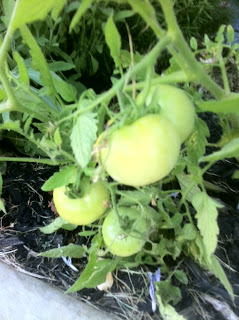
Be gentle.


Be gentle.
Saturday, July 2, 2011
Did you know?
Did you know that there are three types of Down Syndrome?

TYPES OF DOWN SYNDROME
There are 3 chromosomal patterns that result
in Down syndrome.
1. Trisomy 21 (nondisjunction) is caused by a faulty
cell division that results in the baby having three
#21
chromosomes instead of two. Prior to or at conception,
a pair of #21 chromosomes in either the egg
or the sperm fails to separate properly. The extra
chromosome is replicated in every cell of the body.
Ninety five
percent of all people with Down syndrome have
Trisomy 21.
2. Translocation accounts for only 3% to 4% of all
cases. In translocation a part of chromosome #21
breaks off during cell division and attaches to
another chromosome. The presence of an extra
piece of the 21st chromosome causes the characteristics
of Down syndrome. Unlike Trisomy 21,
which is the result of random error in the early cell
division, translocation may indicate that one of the
parents is carrying chromosomal material that is
arranged in an unusual manner.
Genetic counseling can be sought to ascertain
more information when these circumstances occur.
3. Mosaicism occurs when nondisjunction of chromosome
#21 takes place in one of the initial cell divisions
after fertilization. When this happens, there
is a mixture of two types of cells, some containing
46 chromosomes and some with 47. The cells with
47 chromosomes contain an extra 21st chromosome.
Because of the “mosaic” pattern of the cells,
the term mosaicism is used. This type of Down syndrome
occurs in only one to two percent of all
cases of Down syndrome.
Regardless of the type of Down syndrome a person
may have, a critical portion of the 21st chromosome is
present in all or some of their cells. This additional
genetic material alters the course of development and
causes the characteristics associated with the syndrome.
information from the NADS.org web site
Be gentle.
Friday, July 1, 2011
Hot weather fun!
Ama and the boys were playing in the yard yesterday enjoying the warm weather. Wish I had been home to enjoy the fun. Hopefully this weekend!


Subscribe to:
Posts (Atom)