Showing posts with label Genetics. Show all posts

Monday, March 25, 2013

New research Molecular roots of Down Syndrome

I am amazed and fascinated by all of the research and new developments in molecular and genetic medicine. I saw this new research and I hope these scientists are on the right track in understanding m why people with an extra 21st chromosome have mental disabilities.  Even more exciting, the study shows potential therapies to increase brain function in people with this genetic abnormality.

Read this article and let me know your thoughts.........

                 Molecular Roots of Down Syndrome Unraveled


Neurons from a normal mouse (left) are longer and fuller than neurons from a mouse lacking SNX27 (right). (Credit: Image courtesy of Sanford-Burnham Medical Research Institute)
Mar. 24, 2013 — Researchers have discovered that the extra chromosome inherited in Down syndrome impairs learning and memory because it leads to low levels of SNX27 protein in the brain.
What is it about the extra chromosome inherited in Down syndrome -- chromosome 21 -- that alters brain and body development? Researchers at Sanford-Burnham Medical Research Institute (Sanford-Burnham) have new evidence that points to a protein called sorting nexin 27, or SNX27. SNX27 production is inhibited by a molecule encoded on chromosome 21. The study, published March 24 in Nature Medicine, shows that SNX27 is reduced in human Down syndrome brains. The extra copy of chromosome 21 means a person with Down syndrome produces less SNX27 protein, which in turn disrupts brain function. What's more, the researchers showed that restoring SNX27 in Down syndrome mice improves cognitive function and behavior.
"In the brain, SNX27 keeps certain receptors on the cell surface -- receptors that are necessary for neurons to fire properly," said Huaxi Xu, Ph.D., professor in Sanford-Burnham's Del E. Webb Neuroscience, Aging and Stem Cell Research Center and senior author of the study. "So, in Down syndrome, we believe lack of SNX27 is at least partly to blame for developmental and cognitive defects."
SNX27's role in brain function

Xu and colleagues started out working with mice that lack one copy of the snx27 gene. They noticed that the mice were mostly normal, but showed some significant defects in learning and memory. So the team dug deeper to determine why SNX27 would have that effect. They found that SNX27 helps keep glutamate receptors on the cell surface in neurons. Neurons need glutamate receptors in order to function correctly. With less SNX27, these mice had fewer active glutamate receptors and thus impaired learning and memory.
SNX27 levels are low in Down syndrome
Then the team got thinking about Down syndrome. The SNX27-deficient mice shared some characteristics with Down syndrome, so they took a look at human brains with the condition. This confirmed the clinical significance of their laboratory findings -- humans with Down syndrome have significantly lower levels of SNX27.
Next, Xu and colleagues wondered how Down syndrome and low SNX27 are connected -- could the extra chromosome 21 encode something that affects SNX27 levels? They suspected microRNAs, small pieces of genetic material that don't code for protein, but instead influence the production of other genes. It turns out that chromosome 21 encodes one particular microRNA called miR-155. In human Down syndrome brains, the increase in miR-155 levels correlates almost perfectly with the decrease in SNX27.
Xu and his team concluded that, due to the extra chromosome 21 copy, the brains of people with Down syndrome produce extra miR-155, which by indirect means decreases SNX27 levels, in turn decreasing surface glutamate receptors. Through this mechanism, learning, memory, and behavior are impaired.
Restoring SNX27 function rescues Down syndrome mice
If people with Down syndrome simply have too much miR-155 or not enough SNX27, could that be fixed? The team explored this possibility. They used a noninfectious virus as a delivery vehicle to introduce new human SNX27 in the brains of Down syndrome mice.
"Everything goes back to normal after SNX27 treatment. It's amazing -- first we see the glutamate receptors come back, then memory deficit is repaired in our Down syndrome mice," said Xin Wang, a graduate student in Xu's lab and first author of the study. "Gene therapy of this sort hasn't really panned out in humans, however. So we're now screening small molecules to look for some that might increase SNX27 production or function in the brain."
This research was funded by the U.S. National Institutes of Health (National Institute on Aging grants R01AG038710, R01AG021173, R01AG030197, R01AG044420; National Institute of Neurological Disorders and Stroke grants R01NS046673, P30NS076411; Eunice Kennedy Shriver National Institute of Child Health & Human Development grant P01HD29587; National Institute of Environmental Health Sciences grant P01ES016738), Alzheimer's Association, American Health Assistance Foundation, National Natural Science Foundation of China, 973 Prophase Project, Natural Science Funds for Distinguished Young Scholar of Fujian Province, Program for New Century Excellent Talents in Universities, Fundamental Research Funds for the Central Universities, and Fok Ying Tung Education Foundation.
The study was co-authored by Xin Wang, Sanford-Burnham; Yingjun Zhao, Sanford-Burnham and Xiamen University; Xiaofei Zhang, Sanford-Burnham; Hedieh Badie, Sanford-Burnham; Ying Zhou, Sanford-Burnham; Yangling Mu, Salk Institute; Li Shen Loo, Institute of Molecular and Cell Biology, Singapore; Lei Cai, Institute of Molecular and Cell Biology, Singapore; Robert C. Thompson, Sanford-Burnham; Bo Yang, Sanford-Burnham; Yaomin Chen, Sanford-Burnham; Peter F. Johnson, National Cancer Institute-Frederick; Chengbiao Wu, University of California, San Diego; Guojun Bu, Xiamen University; William C. Mobley, University of California, San Diego; Dongxian Zhang, Sanford-Burnham; Fred H. Gage, Salk Institute; Barbara Ranscht, Sanford-Burnham; Yun-wu Zhang, Sanford-Burnham and Xiamen University; Stuart A. Lipton, Sanford-Burnham and University of California, San Diego; Wanjin Hong, Institute of Molecular and Cell Biology, Singapore and Xiamen University; and Huaxi Xu, Sanford-Burnham and Xiamen University.

The above story is reprinted from materials provided bySanford-Burnham Medical Research Institute.


Be gentle.

Monday, March 4, 2013

Did you know? Down Syndrome fact

Down Syndrome Fact.......
"What causes Down Syndrome?"


The Chromosomal Basis of Down Syndrome

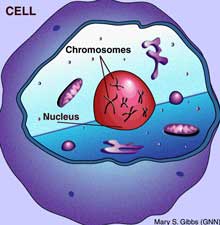
To understand why Down syndrome occurs, the structure and function of the human chromosome must be understood. The human body is made of cells; all cells contain chromosomes, structures that transmit genetic information. Most cells of the human body contain 23 pairs of chromosomes, half of which are inherited from each parent. Only the human reproductive cells, the sperm cells in males and the ovum in females, have 23 individual chromosomes, not pairs. Scientists identify these chromosome pairs as the XX pair, present in females, and the XY pair, present in males, and number them 1 through 22.
When the reproductive cells, the sperm and ovum, combine at fertilization, the fertilized egg that results contains 23 chromosome pairs. A fertilized egg that will develop into a female contains chromosome pairs 1 through 22, and the XX pair. A fertilized egg that will develop into a male contains chromosome pairs 1 through 22, and the XY pair. When the fertilized egg contains extra material from chromosome number 21, this results in Down syndrome.

Be gentle.

Tuesday, November 27, 2012

Who was Jerome Lejeune?

Have you heard of Jerome Lejeune?  I had not heard of him before I started learning about Down Syndrome. He was a fascinating man who identified what makes our children so special.  Read on if you would like to learn more about the man who began to unravel the chromosome mystery associated with Down Syndrome.


About Jérôme Lejeune


Dr. Lejeune and JFK
Jérôme Lejeune was born in 1926 in Montrouge, near Paris. He studied medicine and became a researcher at theNational Center of Scientific Research (CNRS) in Paris in 1952. Dr. Lejeune was also the founder of the first specialized clinic for Trisomy 21 patients at Necker Children’s Hospital in Paris.
In July 1958, as he was studying chromosomes linked to Down syndrome, he discovered the existence of an additional chromosome on the 21st pair. With this remarkable and ground-breaking discovery, he renamed the condition trisomy 21 to accurately describe the genetic abnormality. For the first time Dr. Lejeune had established a link between an intellectual disability and its genetic cause. Dr. Lejeune would go on to discover the genetic cause of cri-du-chat syndrome and to also advance understanding of fragile X syndrome and others.
In recognition of his discovery, in 1964 Jérôme Lejeune was named the first Professor of Fundamental Genetics at the Faculty of Medicine of Paris. While increasing his research he continued to remain available to families, caring for disabled children, and to travel the world giving thousands of lectures on genetics. As a well-known geneticist, he was called to the United States to testify in court in Davis v. Davis, the Tennessee Frozen Embryo Case,in  Maryville, Tennessee in 1989.
Jérôme Lejeune received numerous awards and was a elected as a member of several academies. In 1962 he was honored in Washington, D.C. by President John F. Kennedy with the first Kennedy Prize for his research into genetic intellectual disability and for finding the genetic cause of Down syndrome. In 1969 he received the William Allen Award from the American Society of Human Genetics – the highest award possible for a geneticist.
Jérôme Lejeune died April 3, 1994, shortly after being appointed by Pope John Paul II to serve as the first president of the Pontifical Academy for Life.
Each year on the anniversary of his passing, a Mass is held in a large parish of Paris. The testimony of his life continued to inspire the work of doctors and researchers.
For more information of Jérôme Lejeune, please visit JeromeLejeune.org. There is also a charming biography written of Jérôme Lejeune by his daughter, Clara Lejeune Gaymard, called Life is a Blessing.


Be gentle.

Tuesday, April 24, 2012

Educating and advising after genetic testing?

Genetic testing is providing more accurate information earlier with a lower cost than ever before.  With the use of the prenatal genetic screening, parents can be more informed and prepared when their child is born.  Medical providers have a responsibility to make sure they are giving correct and accurate information when counseling their patients with genetic testing results.  Are providers educated while they are receiving their medical education?  Is it the responsibility of the manufacturer of the new genetic test responsible for provider current and responsible information to potential parents?  I do not know the answer to this question, but it is an important part of the genetic testing realm that I feel needs to be addressed.

Here is a recent article in the Canadian Medical Association Journal on this topic.


Surge in Down syndrome prenatal testing anticipated

April 23, 2012


Life expectancies and health outcomes — physical and mental — for people with Down syndrome have improved greatly.


When a genetic test provides accurate information earlier, cheaper and safer than its predecessors, it's likely to become a popular item. This appears to be the case with a new noninvasive prenatal test for fetal chromosomal abnormalities. Some physicians are concerned, however, that the medical community is not prepared to educate and counsel a potentially huge number of pregnant women facing difficult family planning decisions.
The test, MaterniT21 PLUS, can detect Down syndrome, as well as trisomy 13 and 18. The most common existing tests for these conditions, such as amniocentesis and chorionic villus sampling (CVS), involve the insertion of a needle through the abdomen to acquire cells to be tested for chromosomal abnormalities. These procedures carry some risk, including a small possibility of miscarriage. But MaterniT21 PLUS — made by Sequenom, a company based in San Diego, California — requires only a maternal blood sample.
“This will be the first noninvasive blood test on the market recommended to all pregnant women,” says Dr. Brian Skotko, a medical geneticist in the Down syndrome program at Children's Hospital Boston in Massachusetts. “In the United States, approximately 2% of all pregnant women undergo CVS or amniocentesis. The open question is, now that we have a noninvasive test, will the number of women tested increase, if not altogether skyrocket?”
Sales of the test, which can be taken 10 weeks into pregnancy, have indeed been picking up. About 1000 tests were sold in 2011 after its US release in October, at a cost of US$235 out-of-pocket for women with private insurance and US$1900 for the uninsured. In the first two months of 2012, about 2500 tests have been sold and Sequenom, which has set a sales target of 25 000 for the year, is rapidly expanding its sales force to keep up with demand.
If the test were to one day become ubiquitous, it might be administered by default and that could be a problem, according to Dr. Edward McCabe, executive director of the Linda Crnic Institute for Down Syndrome and professor of pediatrics at the University of Colorado School of Medicine in Aurora. “We're concerned about women who don’t want to know. You could have a physician say, 'By the way, we did this test and you appear to be positive.’ Then the doctors will be making the decision rather than mothers,” McCabe says, adding that he’s concerned the decision as to “whether a family wants to have the test or not will be taken out of their hands.”
Also of concern to McCabe is the potential for a large number of families to be given information on Down syndrome from physicians who know little about the condition or the quality of life a child born with it could expect. Life expectancies and health outcomes — physical and mental — for people with Down syndrome have improved greatly, says McCabe, though that information might not be reaching families.
“We believe in informed decision-making,” says McCabe. “Using outdated information about life expectancy and outcomes is not properly informing the family.”
Not only are many doctors unable to provide accurate information about people with intellectual disabilities, there appears to be inadequate interest in training new physicians to overcome this gap, Skotko has suggested (Arch Dis Child 2009;94:823-6). Studies have indicated 81% of US medical students receive no clinical training on intellectual disabilities, 58% of medical school deans claim such training isn't a priority, and only 36% of fellows and junior fellows of the American Congress of Obstetricians and Gynecologists felt well qualified to counsel an expectant mother who receives a positive prenatal test for Down syndrome, Skotko wrote. “Taken together, these studies suggest that today’s and tomorrow’s physicians are not adequately prepared.”
Skotko also wonders what will happen to Down syndrome research if the widespread adoption of noninvasive prenatal testing leads even more women to decide to terminate pregnancies after positive results. The number of children born with the condition is already dropping considerably. Between 1989 and 2006, there would have been an estimated increase of 42% in the number of children born with Down syndrome (because of factors such as increased age of mothers) in the absence of prenatal testing (Prenat Diagn 2011; 31: 389–94). During that period, however, there was actually a decrease of 11% in Down syndrome births, an effective 53% difference.
“If there are fewer and fewer babies born with Down syndrome, the question is: will [research] funding agencies still consider it something worth funding?” says Skotko.
And it's not as though funding is plentiful now. “Down syndrome is the least-funded genetic condition by the NIH [National Institutes of Health], bar none,” says Michelle Sie Whitten, executive director of the Global Down Syndrome Foundation. “How can we attract good scientists and good doctors? There's no money in this field. They will go into autism or go into other things. It's like a nail in the coffin.”
Her foundation is not against a better genetic test, Whitten points out. But she is concerned that the lack of money dedicated to research and education will mean misinformation about the lives of people with Down syndrome will continue to spread.
“We are not opposed to early, better, safer, cheaper testing for women,” says Whitten “What we are opposed to is the idea of doctors providing inaccurate information.”


What are your thoughts?

Be gentle.

Monday, November 21, 2011

Facts about the Human Genome Project

If you are the parent of a child who is diagnosed with a genetic disease you have never heard of, your initial response is anxiety, fear. And you are apt to wonder, "Where do I get information to help my child?"

Since 2003, many people have learned at least a smidgen about genetics and its relevance to disease and health in the volumes of information written about the Human Genome Project. If you haven't heard of it yet, don't worry. Here is some of the basic information that will be a major factor in health care in the 21st century.

Begun in 1990, the U.S. Human Genome Project was a 13-year effort by the U.S. Department of Energy and the National Institutes of Health. The project originally was planned to last 15 years, but advanced technology helped to accelerate the project so that the goals could be met two years sooner.

These project goals were:

Identify all the approximately 20,000-25,000 genes in human DNA

Determine the sequences of the 3 billion chemical base pairs that make up human DNA

Store this information in databases

Improve tools for data analysis


According to the government web page on the HGP......


What is the Human Genome Project?
Begun formally in 1990, the U.S. Human Genome Project was a 13-year effort coordinated by the U.S. Department of Energy and the National Institutes of Health. The project originally was planned to last 15 years, but rapid technological advances accelerated the completion date to 2003. Project goals
  • identify all the approximately 20,000-25,000 genes in human DNA,
  • determine the sequences of the 3 billion chemical base pairs that make up human DNA,
  • store this information in databases,
  • improve tools for data analysis,
  • transfer related technologies to the private sector, and
  • address the ethical, legal, and social issues (ELSI) that may arise from the project.
To help achieve these goals, researchers also studied the genetic makeup of several nonhuman organisms. These include the common human gut bacteriumEscherichia coli, the fruit fly, and the laboratory mouse.
A unique aspect of the U.S. Human Genome Project is that it was the first large scientific undertaking to address potential ELSI implications arising from project data.
Another important feature of the project was the federal government's long-standing dedication to the transfer of technology to the private sector. By licensing technologies to private companies and awarding grants for innovative research, the project catalyzed the multibillion-dollar U.S. biotechnology industry and fostered the development of new medical applications.
Landmark papers detailing sequence and analysis of the human genome were published in February 2001 and April 2003 issues of Nature and Science. See an index of these papers and learn more about the insights gained from them.


What's a genome? And why is it important?
  • genome is all the DNA in an organism, including its genes. Genes carry information for making all the proteins required by all organisms. These proteins determine, among other things, how the organism looks, how well its body metabolizes food or fights infection, and sometimes even how it behaves.
  • DNA is made up of four similar chemicals (called bases and abbreviated A, T, C, and G) that are repeated millions or billions of times throughout a genome. The human genome, for example, has 3 billion pairs of bases.
  • The particular order of As, Ts, Cs, and Gs is extremely important. The order underlies all of life's diversity, even dictating whether an organism is human or another species such as yeast, rice, or fruit fly, all of which have their own genomes and are themselves the focus of genome projects. Because all organisms are related through similarities in DNA sequences, insights gained from nonhuman genomes often lead to new knowledge about human biology.
Can this be helpful to us as parents of a child with Special Needs?  Only time will tell.


Be gentle.