Showing posts with label books. Show all posts

Wednesday, October 10, 2012

Understanding a Down Syndrome Diagnosis

Who was there to really explain our son's diagnosis?  Yes, the doctor could tell us what our tests said.  But who was really there to help us understand?  I wish I could say we were offered tons of support and resources when we first got that diagnosis.  I wish someone could have been there to guide us through our confusion.  I wish we had been offered a place to go to get information.

The Joseph P. Kennedy Foundation has a wonderful booklet available to assist new parents and parents to be understand the scary words that have just been said to them about their child.  They don't have to be scary words.  And I am glad that there are resources that are being developed to help these parents.


About the booklet.


The Joseph P. Kennedy, Jr. Foundation’s Understanding a Down Syndrome Diagnosis is an accurate, balanced, and up-to-date booklet for use when delivering a diagnosis of Down syndrome. The booklet is the only prenatal resource to have been reviewed by representatives of the national medical and Down syndrome organizations and is available in both print and digital formats. You can request a printed copy through your medical provider or download an ePub for your smartphone, tablet, or desktop.
Understanding a Down Syndrome Diagnosis covers the following:
  • Available health and education services;
  • Common medical conditions for babies with Down syndrome;
  • Information about pregnancy options;
  • Helpful resources about the condition;
  • Spanish translation included in all booklets;
  • Optimization for different reading levels.

Download the book for free HERE. 


A little about the organization.


Statement of Philosophy

The Joseph P. Kennedy, Jr. Foundation believes that persons with intellectual disabilities have the ability to live, learn, work, recreate, and worship like everyone else. We recognize that people with intellectual disabilities may need assistance to do these things.
We believe that families of people with intellectual disabilities, especially families of children with intellectual disabilities, benefit from support and information to successfully include their family member with mental retardation (intellectual disabilities) in the everyday activities of their community.
The Foundation works to improve the lives of people with intellectual disabilities and to prevent the causes of intellectual disabilities.

Goals 
  1. Enhance the quality of life of persons with intellectual disabilities and their families.  
  2. Provide seed funding to capitalize on Federal and/or State or Local spending on behalf of persons with intellectual disabilities and their families by funding initiatives that evolve beyond where existing programs are going, and do not duplicate public efforts.
  3. Increase professional and public awareness of the needs of persons with intellectual disabilities and their families.
  4. Work to reduce the incidence of intellectual disabilities.
And the brochure created by this foundation have received kudos and endorsement by prominent physicians.  Read about it in this recent press release.

Prominent Physicians and Scholars Endorse the Joseph P. Kennedy, Jr. Foundation's "Understanding a Down Syndrome Diagnosis" at the University of Kentucky's HDI

Prominent physicians and academics nationwide are endorsing the Joseph P. Kennedy, Jr. Foundation's "Understanding a Down Syndrome Diagnosis" as the most balanced material that healthcare providers can provide to expectant parents following a prenatal diagnosis at www.lettercase.org.

Lexington, KY, October 10, 2012 --(PR.com)-- Prominent physicians and scholars nationwide are endorsing the Joseph P. Kennedy, Jr. Foundation's "Understanding a Down Syndrome Diagnosis" as the most balanced material that healthcare providers can give to expectant parents following a prenatal diagnosis. The complete list of physicians and scholars can be found at (www.lettercase.org). The booklet was uniquely prepared in 2010 with assistance from the Down Syndrome Consensus Group, including representatives of the American Congress of Obstetricians and Gynecologists, the American College of Medical Genetics and Genomics, the National Society of Genetic Counselors, the National Down Syndrome Congress, and the National Down Syndrome Society.
Dr. Brian Skotko, Co-Director of the Down Syndrome Program at Massachusetts General Hospital states, "When an expectant couple receives a prenatal diagnosis of Down syndrome, providing accurate, up-to-date, and balanced information about Down syndrome becomes an important and immediate goal."

Dr. Alison Piepmeier, Director of Women's and Gender Studies at the College of Charleston, says, "Learning through prenatal testing that your fetus has Down syndrome can be unexpected, confusing, and difficult for many potential parents. In this booklet, those individuals will receive the most up-to-date information about what having a child with Down syndrome might be like for them as well as discussion of other options - including termination and adoption. Photographs of children with Down syndrome at play allow readers to observe life with the condition. It's a beautifully done book with many resources and a fair and unbiased look at the options most individuals will consider after a diagnosis of Down syndrome. I would recommend this book to any person needing more information about a diagnosis of Down syndrome."

A recent study published by Levis et. al. in the American Journal of Medical Genetics found that the booklet parallels what women who are or may become pregnant said they need to know about Down syndrome, including "clinical information about DS, information about families with a child with DS, the degree of medical complications, resources for parents, among many other topics. The booklet also contains many photographs of children with DS engaging in everyday activities."

"Understanding a Down Syndrome Diagnosis" is administered by the University of Kentucky's Human Development Institute (HDI) and is available at www.lettercase.org as a free digital download. Medical professionals can request a free printed copy up to every two months to share with their patients, and high quality printed copies are also available for public purchase. All proceeds from book sales are used by HDI to continue to support the program.
Contact Information
University of Kentucky Human Development Institute
Stephanie Meredith, Lettercase Program/Medical Outreach Director
404-828-0290
Contact
lettercase.org


Be gentle.

Tuesday, September 11, 2012

47 Strings. A story about Tessa

Here is the opportunity to educate kids about Down Syndrome.  47 Strings is a new picture book about a little girl with Down Syndrome by Becky Carey.

Read about this wonderful book and if you can, help this family get this book published so they can help us all with awareness and education.


A children’s picture book about the remarkable lessons to be learned from a little girl named Tessa, who was born with Down syndrome.
 
    Hello—my name is Becky Carey. I am the author of the children’s book, 47 Strings: Tessa’s Special Code. I was inspired to write this book by the birth of my beautiful baby daughter, Tessa, who was born with three 21st chromosomes instead of the usual two—otherwise known as Trisomy 21 and Down syndrome.
    Down syndrome is a genetic condition that causes delays in physical and intellectual development. It occurs in one in every 691 live births and is the most frequently occurring chromosomal disorder. People with Down syndrome have 47 chromosomes instead of the usual 46 – which explains the title of my book.
    One of the first things we needed to do was tell Tessa’s 7-year old big brother, Casin, about her Down syndrome diagnosis. We wanted him to be prepared if and when people asked him questions. Mostly, we wanted to make sure that he learned about Down syndrome in a manner that was relaxed, understandable and heartfelt. 
    Casin loves stories, I wrote this story with him in mind—and read it to him as he sweetly held Tessa’s hand. We recorded that moment and posted it on YouTube and on our blog. It was perfect and real.
    Check out the blog at:http://deartessa.com/
    Our YouTube video has reached over 10,000 views because of people like you…who have shared it with friends, family, or on your Facebook pages. THANK YOU! Keep spreading the joy and the good word! 
    Now we need your help to publish 47 Strings: Tessa’s Special Code as a children’s picture book–to inspire, help guide, and reassure parents and families all over the world that kids with “47 strings” just means there is a little more of them to love. The money raised will be used to cover the cost of professionally illustrating, editing, publishing and printing 2,000 beautiful hardcover books.
    BUT…we only have 30 days to reach our goal! So we need you to do these three simple things:
    1. Pledge any amount of money!
    2. Spread the word by sharing this with others!
    3. Receive great incentives!
    Without you, we won’t reach our goal and make it possible to help other families like mine as they start their journey. Help us spread understanding and awareness of Down syndrome.
    “There are only a few books out there for younger children about Down Syndrome. I especially like how Tessa's story is more positive from the parents’ perspective. I could definitely see this book being utilized by:
    - Parents to educate other siblings, and their friends, in an easy-to-understand way.
    - Classrooms to educate peers of a child with Down syndrome.
    - Hospitals and pediatricians to give to parents upon diagnosis of Down syndrome.”
    – Sue Dahlen, mother of 3 girls including middle daughter, Caroline, who has Down syndrome
    Special thanks to Ann Gorgen, photography; Jason McGraw, videography; and Carrie Stidwell O'Boyle, writer/editor.

    Be gentle.

    Sunday, June 10, 2012

    Sunday Smile and a special gift

    Sunday Smile

     Davey likes to grab my digital camera and take pictures.  Lots of pictures.  He loves taking self portraits.  Not sure why he took a picture of his foot yesterday, but I thought it was funny.  Also sweet picture of Davey and Veronika.

    Also got a really cute photo of William at the end of the school year honor roll ceremony.  William made Superintendent's Honor Roll all three trimesters and only missed 2 days of school.  So proud of him!

    Also, under the photos is a brief intro to my blogger friend Caroline and her wonderful, inspiring e-book.  She will send you this e-book for free.  I hope you enjoy it as much as I did.


    Here is that special gift information from my friend Caroline........

    My name is Caroline McGraw, and I write about finding meaning in your most challenging relationships at AWishComeClear.com. Having connected with Shannon, I'd like to invite you to receive a free copy of Your Creed Of Care:  How To Dig For Treasure In People (Without Getting Buried Alive). It’s a book about balancing the responsibilities of caregiving for an individual with disabilities with that of caring for yourself. It’s a labor of love, containing 60+ pages of true stories and essential insights on life alongside someone with a disability. It’s about living a life grounded in self-respect. It’s about loving yourself, so that you can love people with special needs from a place of peace.


    Be gentle.

    Friday, June 1, 2012

    New great read for young adults. Oh, and the main character rocks her extra chromosome

    Love finding great stories about kids with Down Syndrome.  Siblings and parents often wonder what their sibling/child is going to be like as they grow up.  I know I do.

    I love the fact that this book is written for middle school.  At a time when children are growing and changing so fast, here is a book about individuality, special needs, and being normal.

    I just hit the purchase button on Amazon.  I can't for for this book to arrive so all of us can read it.  I love a good mystery!

    Sam's Top Secret Journal: Book One - We Spy

    Here is the description from Amazon.


    Sam's Top Secret Journal: Book One - We Spy


    Sam’s Top Secret Journal – Book 1: Sam Spies by Sean Adelman Join Sam as she embarks on her first big adventure in this middle-grade mystery full of fun, suspense…and just the right amount of spying! Sam is a middle school girl living a normal life–except when she is occasionally bullied for the differences kids perceive in her. Sam has Down syndrome. But Sam is just like any of her friends. She likes to play basketball, perform in community plays, gossip about boys at lunchtime, and write about life in her top-secret journal. Plus, her Uncle Alex is coming home from Iraq soon, and with so much to do, there’s hardly time to dwell on anything except getting reading for his visit! But when curious occurrences start to disturb her community, Sam’s carefree life suddenly becomes dangerously serious. A shady man in a trench coat has stolen donuts from the bake sale, money is disappearing from donation jars at the farmer’s market, and worst of all, her friend Michael has gone missing and could be in real danger. Together with her gadget-savvy little brother, John, Sam is determined to solve Seattle’s most recent set of mysteries. With Sam’s big heart and John’s quick head, nothing can go wrong! …Right? With much more at stake than donuts, her adventures have only just begun! Sean Adelman is a practicing orthopedic surgeon in Seattle, Washington. Sean is an advocate for exceptional kids and enjoys his free time with his lovely wife, Susan, and his three children. When he’s not busy being a dad, surgeon, and author, he can be found running or playing classic rock and roll on his electric guitar.


    Be gentle.

    Friday, April 20, 2012

    Down Syndrome reads.........

    Lots and lots of books out there for parents and children, but what if you want to find more scholarly info?  I started a search and came up with A LOT of books out there.  I would love to add them all to my library, if only I was a millionaire.  LOL.  Maybe slowly?  I just love books.

    I ordered one on Amazon after reading a review in Lancet.  The title is "Downs, the History of a Disability."  I will let you know what I think after I read it.

    Click to toggle image size

    The review in Lancet states that the book is more a history of social views on Down Syndrome.  I am looking forward to reading it.

    The Lancet, Volume 379, Issue 9825, Page 1478, 21 April 2012
    doi:10.1016/S0140-6736(12)60619-9

    Missing from history

    19 prominent doctors wrote to The Lancet on April 8, 1961, advocating that the term “mongolism” be abandoned. It was the then Editor of this journal who chose “Down's syndrome”, which David Wright calls “the least descriptive—and perhaps the most conservative—of the five alternatives proposed”.
    Histories of disability are important because they document how disability is not simply a biomedical phenomenon, but is something that is deeply shaped by cultural ideas, by social arrangements, and by social values. The implication is that the lives of people with disabilities could be different—and better—if only society was more inclusive and supportive.
    Naively, I came to Downs: the History of a Disability hoping to learn about the lives of affected individuals in earlier centuries. But, of course, the lives of millions of people with Down syndrome have disappeared from sight, not because they were unimportant to their families and communities, but because they left no trace in the historical record. We cannot even draw conclusions about what Wright calls the “prehistory of Down syndrome”. Were the centuries before the arrival of medical labelling and special education a utopian age of acceptance and diversity? Or, more likely, were people with Down syndrome neglected, abandoned, and left to die?
    Instead, this book offers us a history of social responses to the condition. The turning point was the 1840s, with the emergence of the mantra that “the idiot could be educated”. The heroes were reformers like Edward Séguin in France and Dorothy Dix in the USA, who fought to get people with intellectual disabilities out of prisons and workhouses, and into specialist schools and institutions where (in theory) they would be supported and protected. In England, the alienist John Conolly campaigned for specialist provision such as the Royal Earlswood Asylum in Redhill. It was here in 1858 that the young doctor John Langdon Down began his work.
    More than 150 years earlier, John Locke had found “idiots” useful evidence for his claim that the human mind was a tabula rasa. In 1866, in an era obsessed with racial difference, Down identified a subgroup of his patients whom he claimed represented the reversion of Caucasians to earlier racial types: the “Mongol” was an example of atavism. Wildly wrong in his theory, Down had nevertheless for the first time correctly demarcated the syndrome that later was to bear his name. Perhaps the conclusion he drew—about the unity of the human species—was less racist than critics have suggested. However, in his practice at Earlswood, he demonstrated the fascination with diagnosing and classifying that modern advocates have denounced as unhelpful to the inclusion of children and adults with intellectual disability. Wright describes how, in 1868, Down resigned from his post under suspicion of corruption, going on to found a lucrative private institution which he ran with his wife. By extraordinary coincidence, his son Reginald's only son Jonathan was born with the syndrome.
    Debates raged in the late 19th century about aetiology. Parental alcoholism, endocrine malfunction, tuberculosis, syphilis, brain damage, and uterine exhaustion were all blamed. This last idea, reflecting the observation that it was often late-born children who had the condition, came closest to the truth. In the early 20th century, hereditarian explanations began to predominate, again reflecting wider intellectual fashions. By 1949, the meticulous investigations of Lionel Penrose had confirmed the role of maternal age and laid the foundations of scientific understanding of the syndrome.
    I learned much from this history: from the irony of Jérôme Lejeune (the Catholic doctor who took the credit for the discovery of trisomy 21) campaigning against selective termination, to the strange notion of trying to use Marmite as a dietary supplement to remedy the condition. Wright's book explores far more than could be discussed in a brief review: eugenics, intelligence testing, cytogenetics, social policy, normalisation, deinstitutionalisation, and changing cultural representations. While context is important, Wright too often slips from the specific to the general. For example, the discussion of Nazi euthanasia does not include Down syndrome statistics or life stories. Perhaps the book would have been better cast as a history of intellectual disability, with Down syndrome as a particular case study.
    Notwithstanding this quibble, Wright has provided a fluently written account that offers an excellent historical introduction to the continuing tension between the inclusion and the elimination of people with disabilities: 150 years after Down's description, prospects of a cure remain remote, while the trend towards later motherhood means that the prevalence of the condition has barely dipped, despite amniocentesis.

    Here is a few of the books I have found.  Have you read any of them?  What are your thoughts on how truthfully the concepts are presented?

    The Politics of Down Syndrome

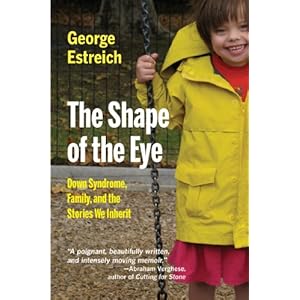
    The Shape of the Eye: Down Syndrome, Family, and the Stories We Inherit (MEDICAL HUMANITIES SERIES)

    Gifts 2: How People with Down Syndrome Enrich the World


    Be gentle.

    Wednesday, April 4, 2012

    Bloom. A memoir of a Mom

    What is it like to be a parent of a child with Down Syndrome?  Do you know someone with a child with Down Syndrome?  Are you a new parent of a child with Down Syndrome?  Do you enjoy reading a good book?  If you have answered yes to any of these questions, then this book is for you.

    Bloom: Finding Beauty in the Unexpected--A Memoir

    Bloom: Finding Beauty in the Unexpected--A Memoir

    by Kelle Hampton

    Here is a brief description of the book as found on the Amazon site.

    Love me. Love me. I'm not what you expected, but oh, please love me.
    That was the most defining moment of my life. That was the beginning of my story.
    From the outside looking in, Kelle Hampton had the perfect life: a beautiful two-year-old daughter, a loving husband, a thriving photography career, and great friends. When she learned she was pregnant with her second child, she and her husband, Brett, were ecstatic. Her pregnancy went smoothly and the ultrasounds showed a beautiful, healthy, high-kicking baby girl.
    But when her new daughter was placed in her arms in the delivery room, Kelle knew instantly that something was wrong. Nella looked different than her two-year-old sister, Lainey, had at birth. As she watched friends and family celebrate with champagne toasts and endless photographs, a terrified Kelle was certain that Nella had Down syndrome—a fear her pediatrician soon confirmed. Yet gradually Kelle's fear and pain were vanquished by joy, as she embraced the realization that she had been chosen to experience an extraordinary and special gift.
    With lyrical prose and gorgeous full-color photography, Bloom takes readers on a wondrous journey through Nella's first year of life—a gripping, hilarious, and intensely poignant trip of transformation in which a mother learns that perfection comes in all different shapes. It is a story about embracing life and really living it, of being fearless and accepting difference, of going beyond constricting definitions of beauty, and of the awesome power of perspective. As Kelle writes, "There is us. Our Family. We will embrace this beauty and make something of it. We will hold our precious gift and know that we are lucky."


    And here is an article written by ABC news about the book.

    Kelle Hampton was not expecting anything other than the picture perfect child when she headed to the hospital to deliver her second baby, Nella.  But her expectations did not meet her reality. 
    She described her daughter’s birth in the inaugural post of wildly popular blog, Enjoying the Small Things: “I knew the minute I saw her that she had Down Syndrome and nobody else did. I held her and cried. Cried and panned the room to meet eyes with anyone that would tell me she didn’t have it. I held her and looked at her like she wasn’t my baby and tried to take it in. And all I can remember of these moments is her face. I will never forget my daughter in my arms, opening her eyes over and over…she locked eyes with mine and stared…bore holes into my soul. ‘Love me. Love me. I’m not what you expected, but oh, please love me’”.

    ht Kelle Hampton nt 120201 wblog Living with Down Syndrome: A Mothers Journey
    Kelle is the mother of two beautiful little girls, Lainey who is 4, and Nella who just turned 2 and was born with Down Syndrome.  Nella is like many 2-year-olds. When she turned 2 it was as if she decided, “I am bringing it,” Kelle says.  She walks, and talks, and keeps her family on their toes.  
    In my very honest conversation with Kelle, she explains that coming to terms with the reality of the chromosomal disorder was a journey, one which she discusses openly and without self-censorship.  Kelle speaks of the grief she encountered in the days following her daughter’s birth, forcing her to let go of one dream and replace it with another.  She explains,  ”The very first night was the most grief I have ever had in my entire life.  It was the entire night, I cried.  It was almost physical pain, just heaving sobs.” 
    When I asked her how she got through those days, she told me that she found strength in her two daughters. “Those first days the strength honestly came from Nella.  And it was so healing, you know, as I am sobbing and crying, I am still holding this baby that was mine.  And she needed me.”  Her older daughter, Lainey, just 2 at the time, taught Kelle how to love because, as Kelle puts it, Lainey “didn’t see Down Syndrome.  And watching her and the way she loved [Nella] was completely pure.  I wanted to love my daughter like Lainey loved her.”   
    Kelle also turned to her husband, friends, family, and specifically her sister. “My sister was a rock in the beginning,  I remember she told me, ‘I’m actually jealous because you are going to have so many beautiful experiences with her. You are going to feel like you have a secret that you are going to want to tell everybody.’ And I heard that over and over.”
    Kelle explains on her blog that she and her husband were afraid of the struggles their daughter would face, and they worried that their little girl would encounter a lifetime of teasing and alienation, explaining that “many of our concerns grew out of a common hope we share with any parent—that our child will be accepted and seen for her abilities and character rather than what makes her different.”
    In the two years since Nella’s birth, Kelle has been proven wrong (pleasantly so) on many of the concerns and stereotypes that even she had about children with Down Syndrome.  And she chanelled her energy into a drive to help educate pretty much anyone that will listen – or read - her story. 
    Kelle lives life out loud.  She is not a politician or a well-connected socialite, just a mom whose love for her child is contagious.  And that love has helped her raise over $200,000 for the National Down Syndrome Society – in just the two years since Nella’s birth – making strides for her own family and the extended Down Syndrome community.
    Kelle’s raw, honest, and sometimes very entertaining account of her journey of not only accepting the life she never imagined, but completely loving it with her very big heart can be read in full detail in her memoire “Bloom,” published by Harper Collins/William Morrow, which will be available on April 3


    I plan on reading it this week.  I'll let you know what I think.


    Be gentle.